

Style Guide
Platform is a trusted companion for skilled workers and migrants in Germany.
The tone is empathetic, professional, and motivating.


Solution
Create a user-friendly career coaching platform that allows users to:
Find a personalized coach easily
AI-powered career assistant evaluates users’ goals, background, and needs to create a personalized career profile, then generates a tailored career roadmap and recommends the most suitable coaches.


Book a free introductory session
users can have a first Introductory call to understand if the coach is a good fit.
Quick CV / document review
users can upload CVs or other documents for fast, affordable feedback from their coach without scheduling a full session.
Develop a structured career plan
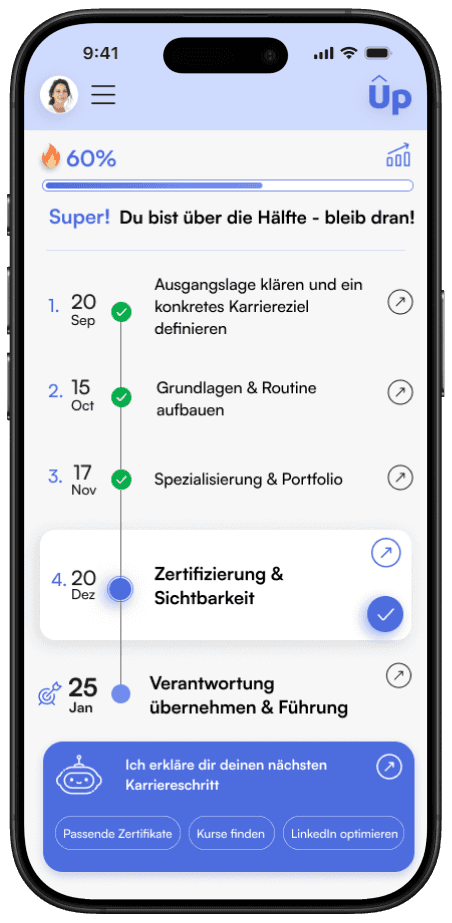
A coach and user create a step-by-step plan with milestones and goals, visualized on a personal dashboard for progress tracking.
Style Guide
Final Design
Flow 1 · Find a coach and book a free intro call
Flow 2 · Build a structured career plan with the coach
Flow 3 · Get quick CV feedback from a coach


Edge-case analysis: Used Claude Code connected to Figma via MCP to analyse an existing user flow and suggest potential
missing edge cases. I reviewed the suggestions independently, selected the relevant cases, and incorporated them into the design.
Ideate
Based on the insights from the previous research, I identified the most important features users are looking for.
To address these needs, I created 3 user flows focusing on the key user goals.
Usability Test
Users struggle to find suitable coaching offers
due to language and cultural barriers.
50%
Key Insights from User Research
Users are willing to use coaching services if the offer matches their needs.
Expectations from coaching: a clear, structured plan and personalized feedback.
Preferred communication: online and flexible.
When choosing a coach, users value professional qualifications, experience, cultural understanding, and reviews.
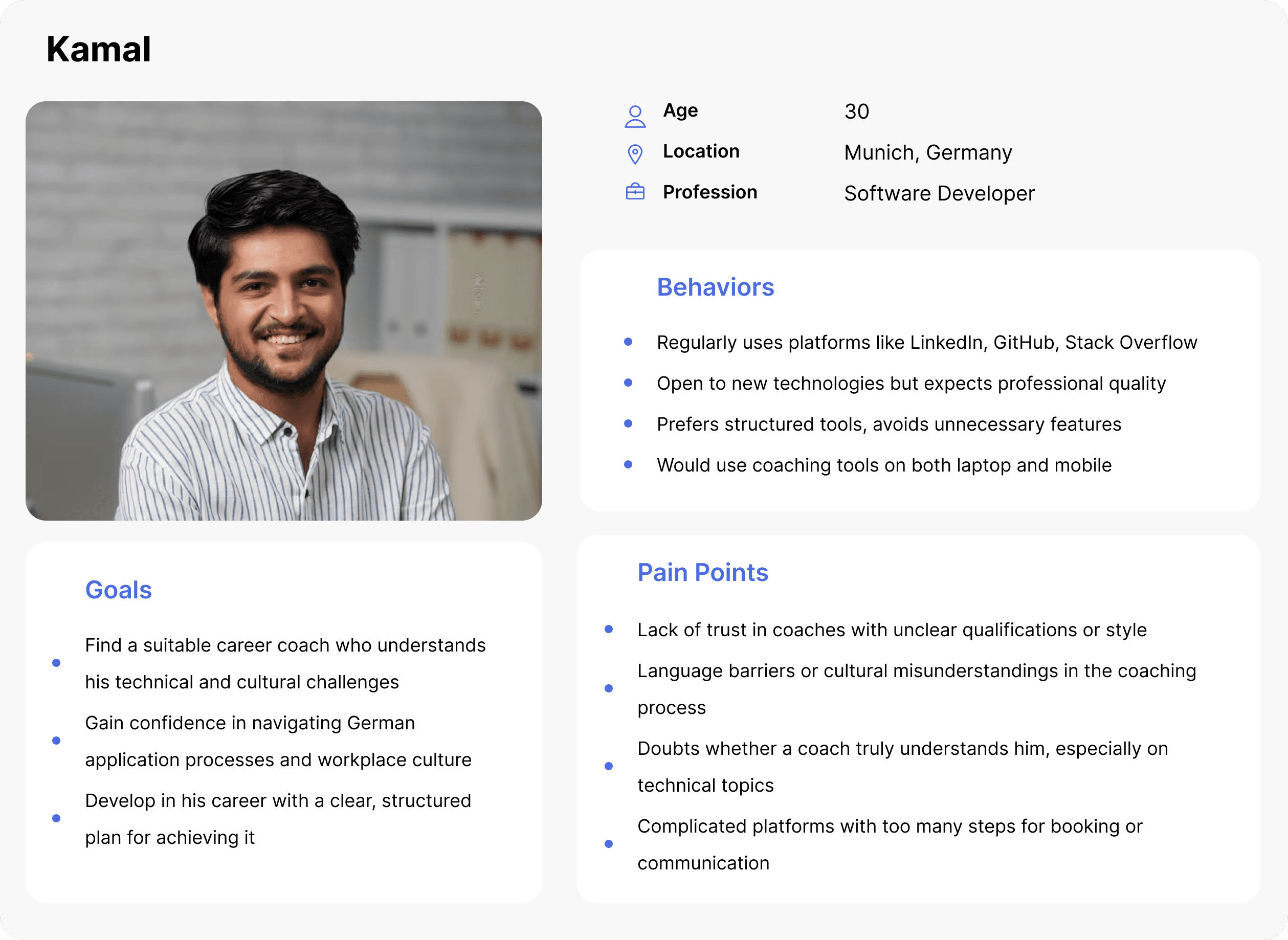
Based on the results of my surveys and the key insights derived from them, I developed 2 core user personas representing the target audience.
60%
Users find AI helpful for analyzing goals and structuring next steps, but human validation remains essential.
COLORS

LAYOUT GRID

ATOMS

MOLECULES

Target group of platform are migrants in Germany who want to grow professionally but struggle to find career coaching that understands their specific challenges, including cultural context. They also face a lack of flexible, accessible, and affordable coaching options.
Problem Statement
Problem 4
Confusion regarding the coach’s structured plan: the bottom-to-top order was not clear, and a top-to-bottom layout would be more intuitive.
Solution
I have numbered the steps from 1 to the last and adjusted the order to a top-to-bottom layout, as requested by the users.

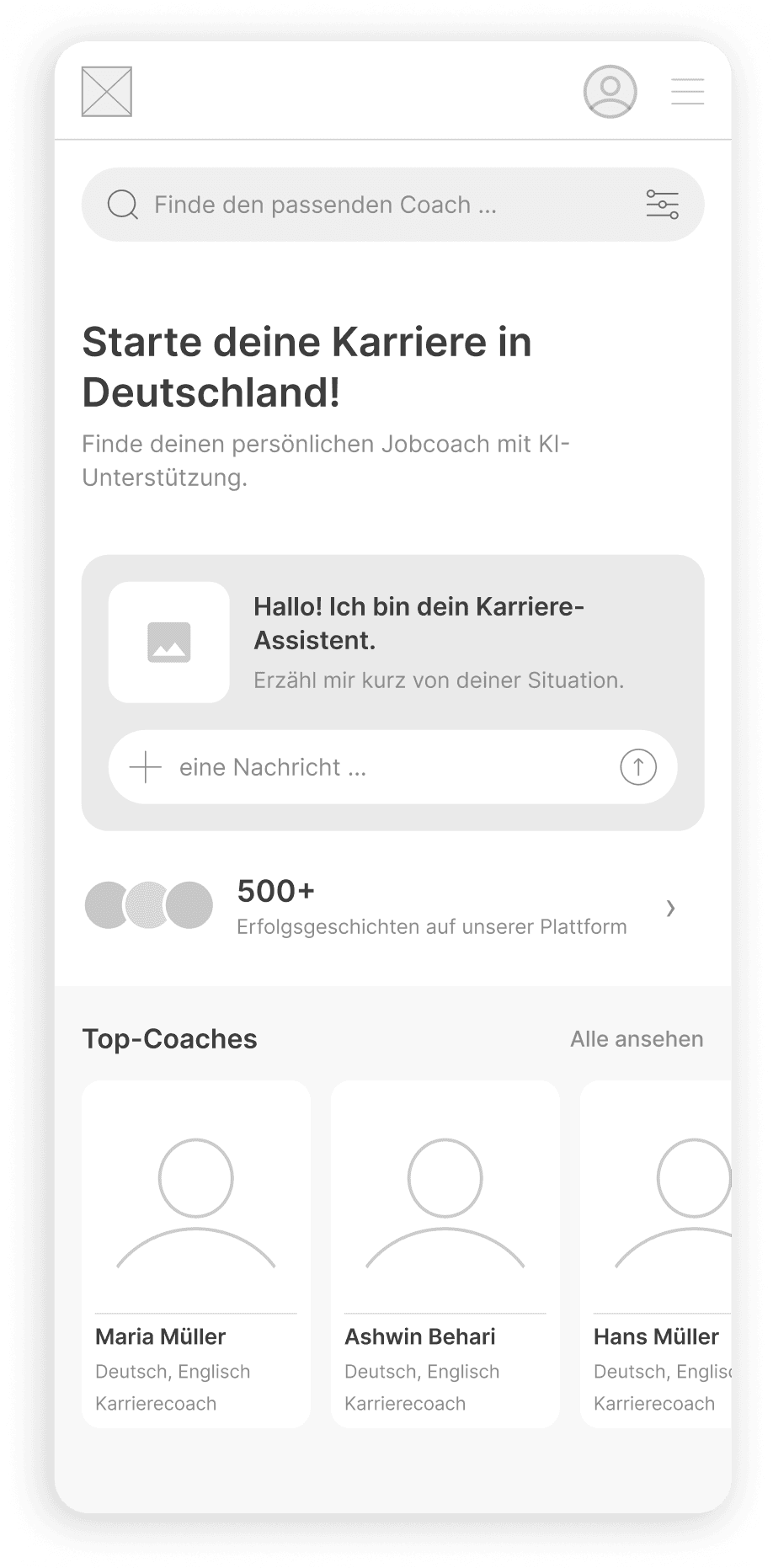
The home screen features an AI assistant that guides users through identifying their career goals. Based on their input, it creates a personalized career plan with clear milestones and recommends coaches who best match their individual needs and career aspirations.


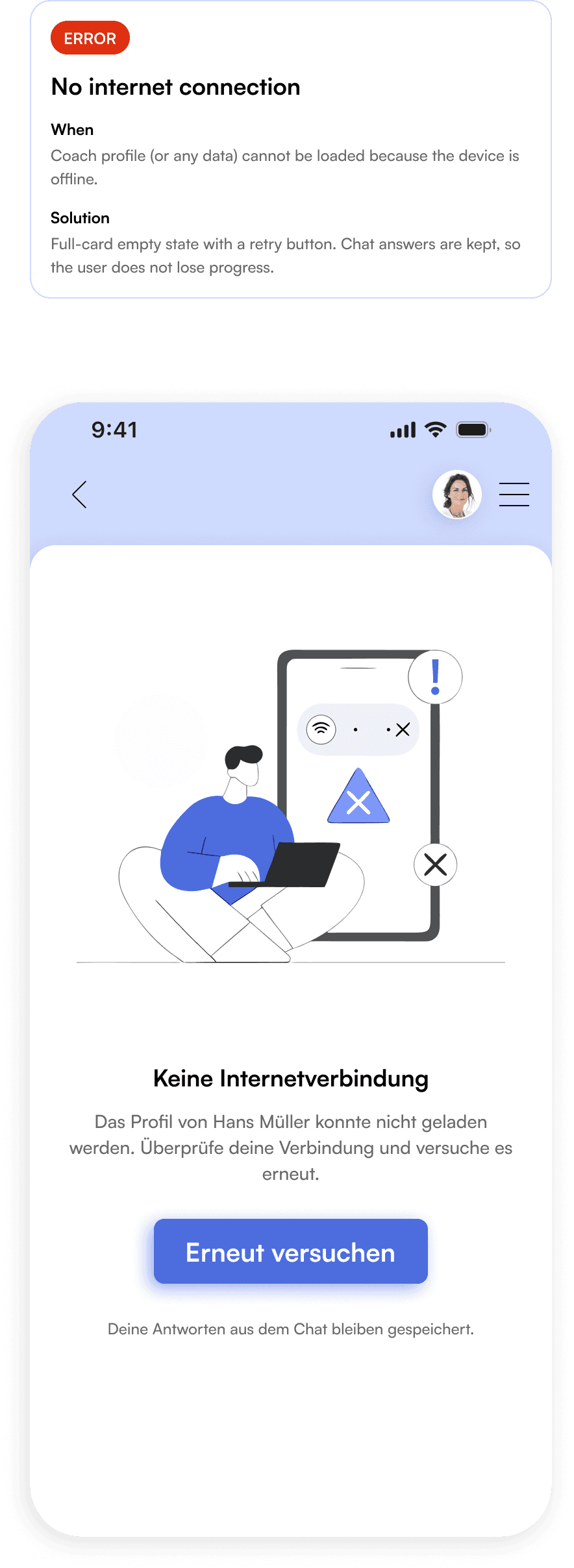
Edge Cases & States


Reflections & Next Steps
1. AI as a design support tool
I explored how AI could support different stages of my design process without replacing my own judgement. I used AI to support tasks such as research synthesis, design system and accessibility checks, user flow reviews, and edge-case analysis.
I reviewed and validated the results myself and used them as input rather than as final decisions.
One of the experiments was using AI for competitive analysis. While it helped speed up the initial exploration, I found inaccuracies in the results and therefore decided not to rely on it for the final analysis. This reinforced for me that AI is most useful as a supporting tool for exploration and critical review, rather than as a replacement for research and design decisions.
2. Designing for trust in AI
The research showed that users were open to AI support, but still wanted human validation and a clear explanation of why a particular coach was recommended.
This made trust an important part of the experience — not just the AI functionality itself. In a future iteration, I would make the matching criteria more transparent, for example by showing which factors influenced the recommendation.
3. From mobile-first to responsive experience
I started with a mobile-first approach to prioritize the most important information and interactions. I then adapted the core experience for larger screens, considering how more available space can support complex tasks such as reviewing a coach profile, comparing information and booking a session.
4. What I would validate next
In the next iteration, I would validate whether the redesigned experience builds trust and helps users make confident decisions throughout the key journeys.
I would focus on:
Do users understand why a coach was recommended and which criteria influenced the match?
Can users confidently compare coaches and decide who is right for them?
Can they complete the booking process without hesitation or confusion?
Does the AI assistant provide useful guidance while keeping users in control of the decision?
These findings would help me refine the experience and identify which parts of the journey need further iteration.
participants have no prior coaching experience, but show high interest.
80%

Thanks for Scrolling!
Back to Top
Get in touch:





Competitive Analysis
UpKarriere platform is designed for newcomers in Germany who face challenges like finding a job and understanding the local market.
It offers AI-based coach matching, free introductory sessions, quick access without long registration, structured plans with milestones, and simple document checks, making it easy and motivating for users taking their first steps in Germany.
Target Audience / Focus
AI Coach Matching
Personalized Resources
CV / Document Check
Free Intro Session
Structured Plan
Key Value
Migrants in Germany
professional coaching
industry-specific
coaching
corporate
coaching
UpKarriere
MentorLane
MentorCruise
CoachHub
The step-by-step coaching plan turns long-term goals into clear, manageable actions by visualizing progress and defining next steps.
AI-powered job-coaching platform
UX/UI Case Study
UpKarriere is an AI-driven platform that connects migrants in Germany with career coaches, helping them find the right match and advance their professional development.

My Role
UX/UI Designer · End-to-End
Type
Web responsive app
Timeline
6 months · 2025
Tools
Figma · FigJam · Miro · Claude · Gemini

TYPOGRAPHY
To position UpKarriere within the German coaching market, three key competitors were selected:
CoachHub (Corporate Leader), MentorLane (individual professional coaching), and MentorCruise ( industry-specific mentoring)
Quotes from user interviews:

Kamal
Sometimes I don’t have time for long coaching sessions. Short, concrete tips in between would be perfect.

Sara
Career coaching should be on equal terms – I’m looking for someone who understands my situation

Olena
I need a clear, structured plan from my coach that shows me how to develop my career

Anna
I’ve already worked with a coach
and found it helped me develop my career

Eugen
I find it very helpful if AI could create a summary after the session, as I don’t like taking notes during the session
Kamal
A clear and intuitive user interface is very important so that I can quickly and easily find the right coach.
Additionally, I conducted a Survey with 10 potential users via Google Forms to better understand their needs, expectations, preferred communication formats, and attitudes toward using AI on the platform.
Define
I conducted a usability test with 5 people from my target group.
As a result of this test, I was able to identify four key problems in my prototype.
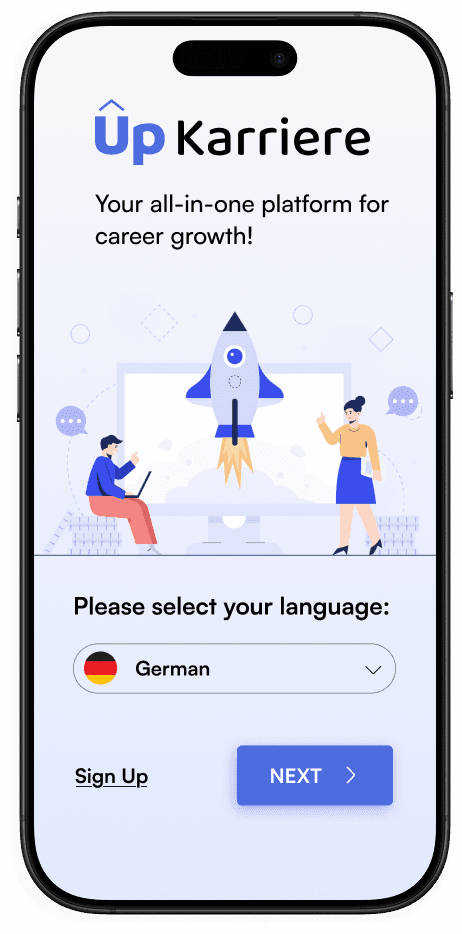
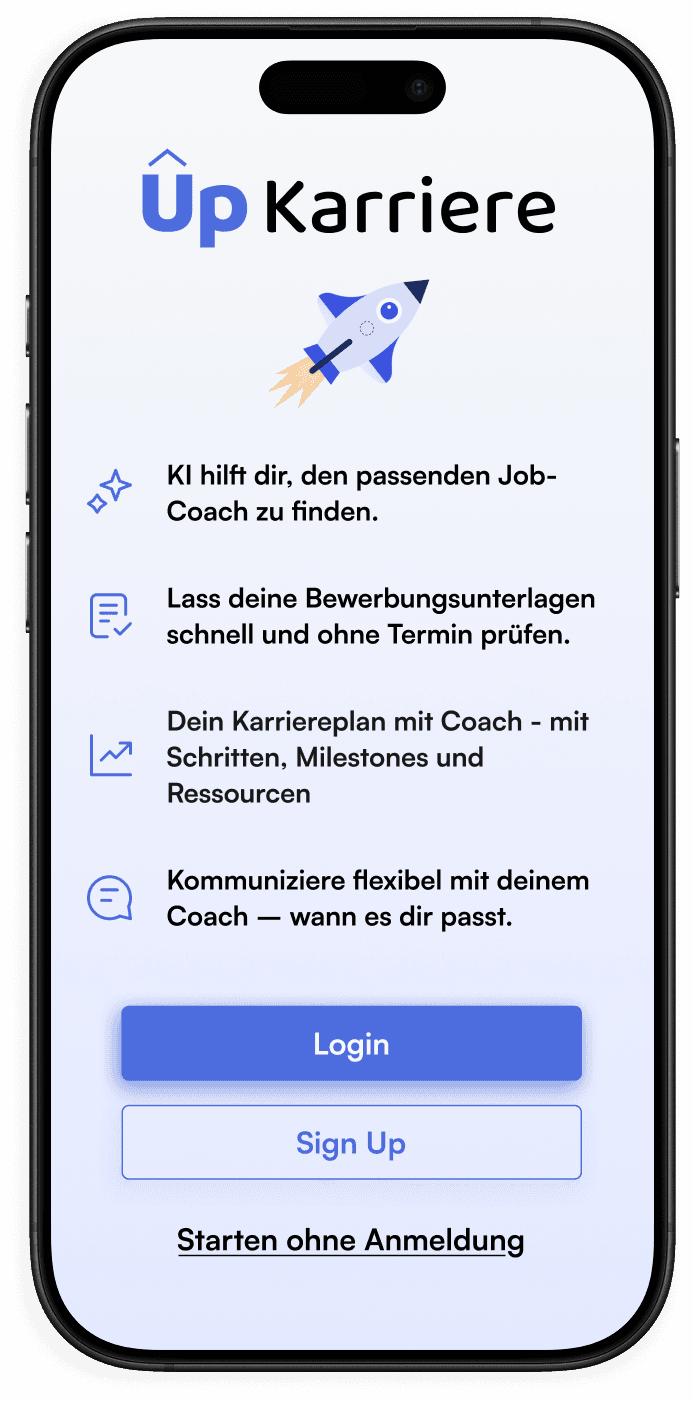
Problem 1
During onboarding, 3 participants felt overwhelmed by the number of pages and were confused by the start page defaulting to English.
Solution
I removed the unnecessary onboarding step, added a language selection option directly on the start page to give users immediate control, and consolidated the explanation of the core features into a single, concise page.
4 of 5 participants said the new onboarding felt clearer than the previous version
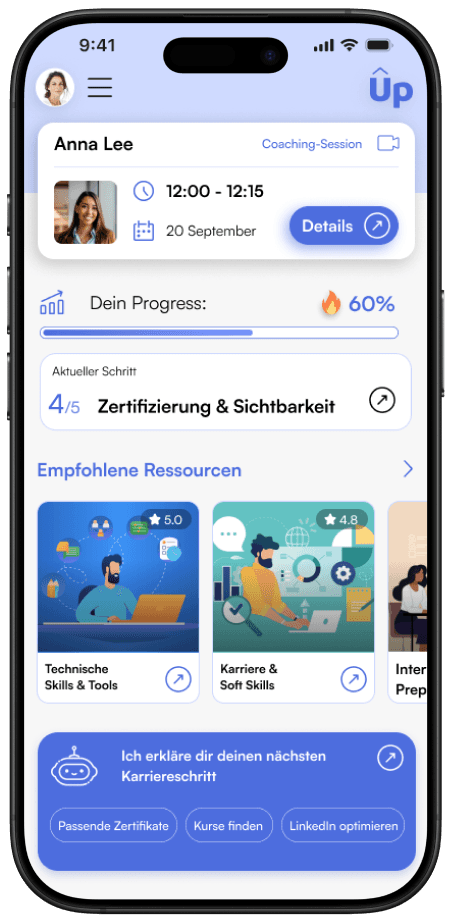
Problem 2
4 participants expressed a desire to see both new messages and their booked appointments directly on the start page.
Solution
I consider this feedback to be valid, and I addressed it by adding a notification card to the home screen. This card allows users to see their booked sessions as well as notifications from their coach at a glance.


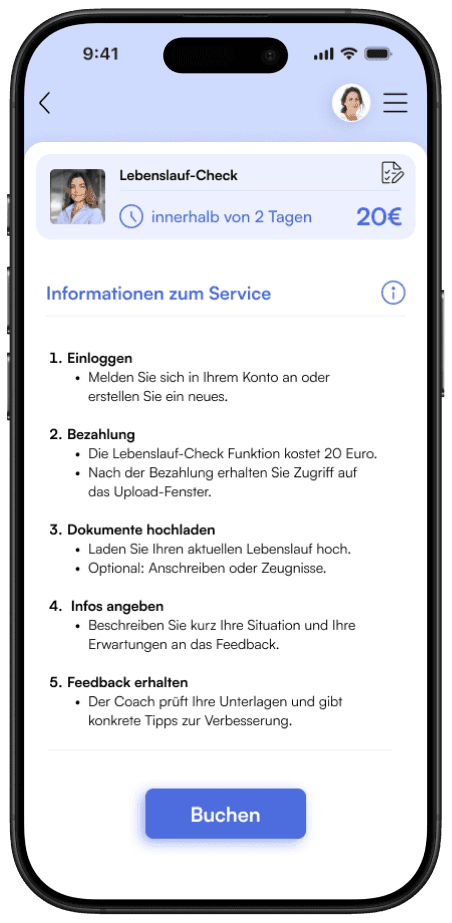
Problem 3
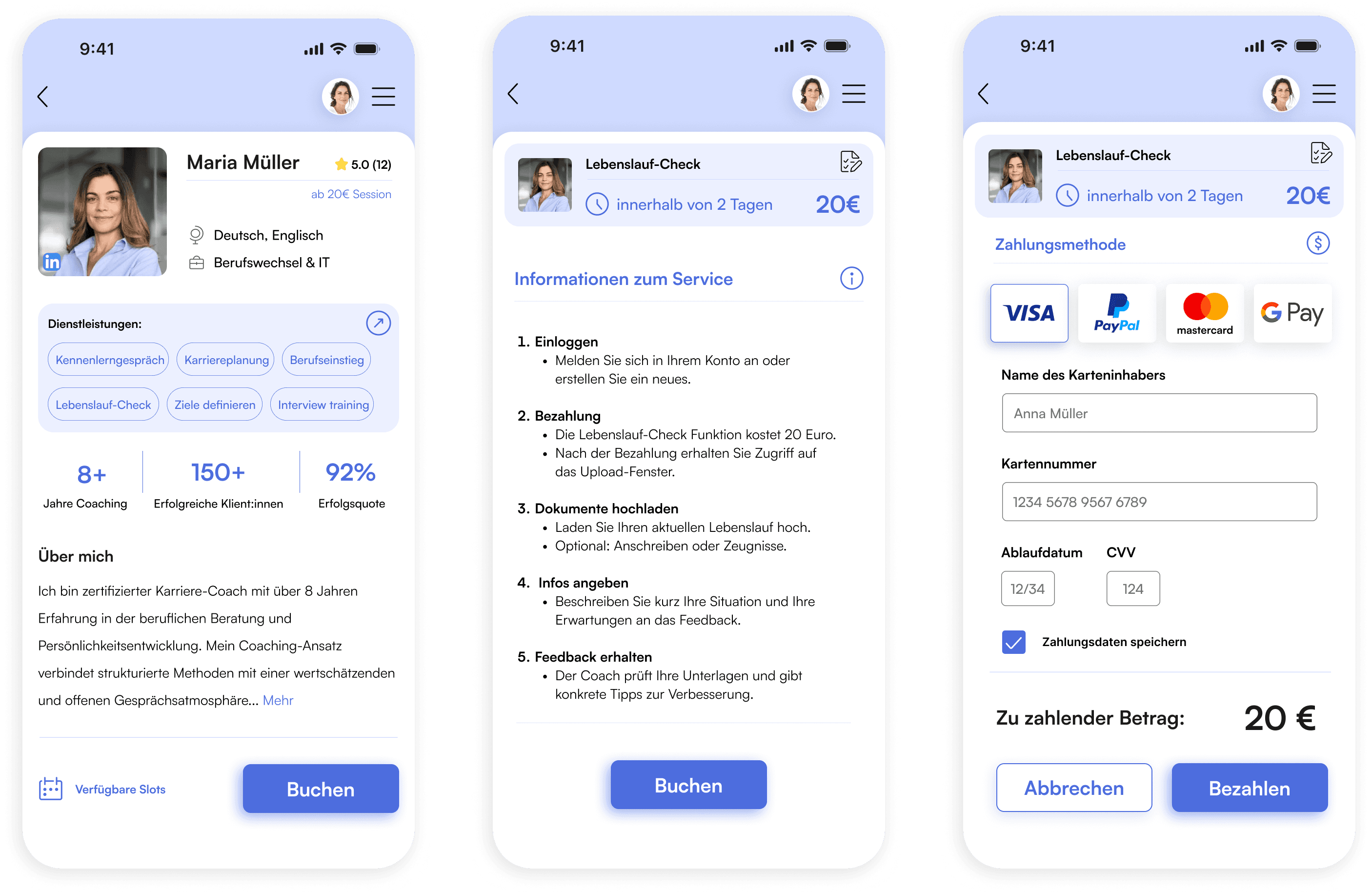
All participants found the flow after clicking on “CV Check” unclear. They didn’t understand why a login was required immediately, why payment was needed upfront, and exactly which services were included.
Solution
To improve clarity, I created a dedicated page that appears after clicking “CV Check,” providing a clear explanation of the service, including its steps, duration, and cost, to reduce user frustration.
Search for a coach and the booking process
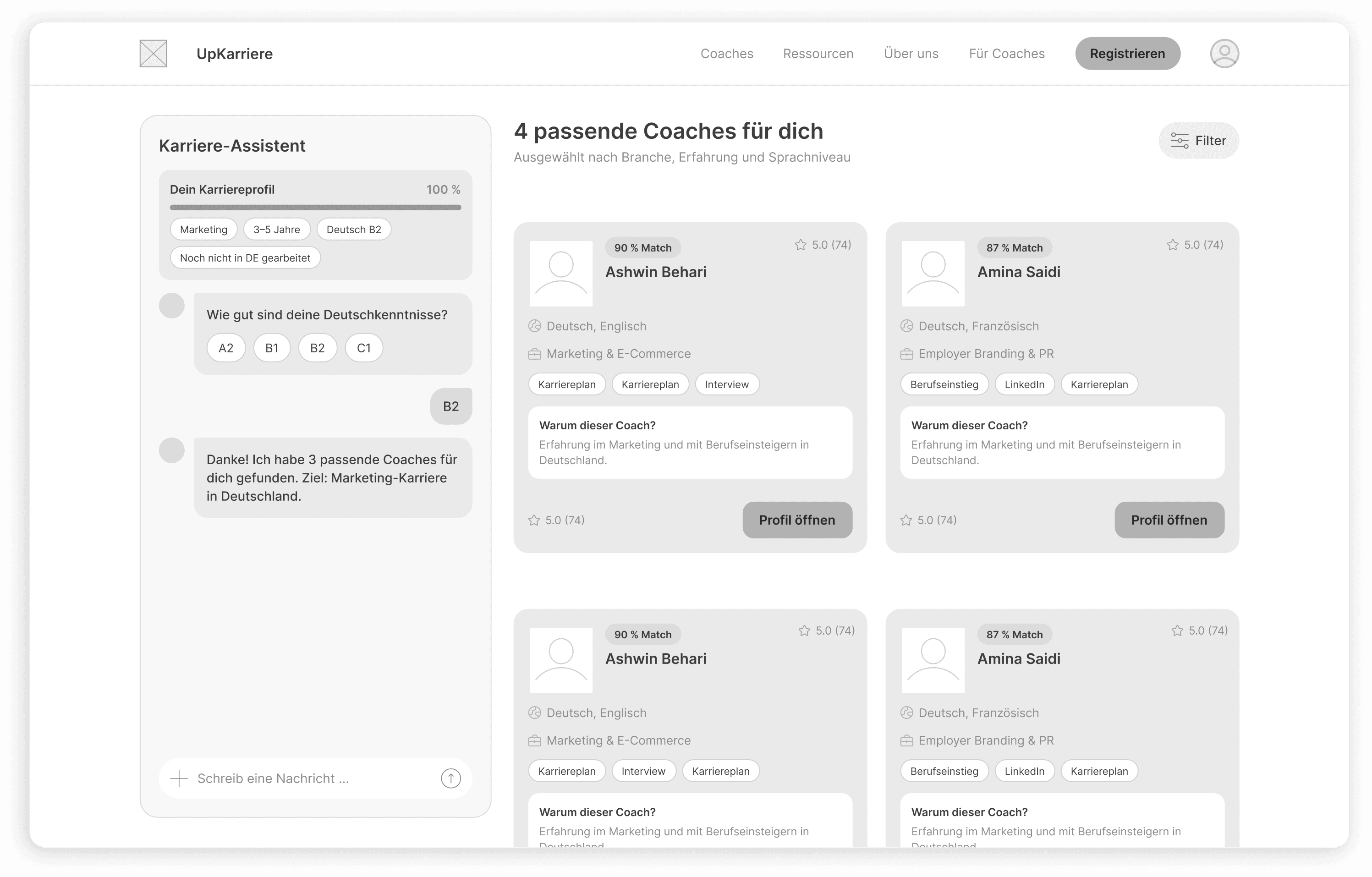
The process starts with the user chatting with a career assistant, who collects the user’s goals, background, and requirements. Based on this information, the career assistant recommends a suitable career coach. The user then opens the coach’s profile and books an introductory session.
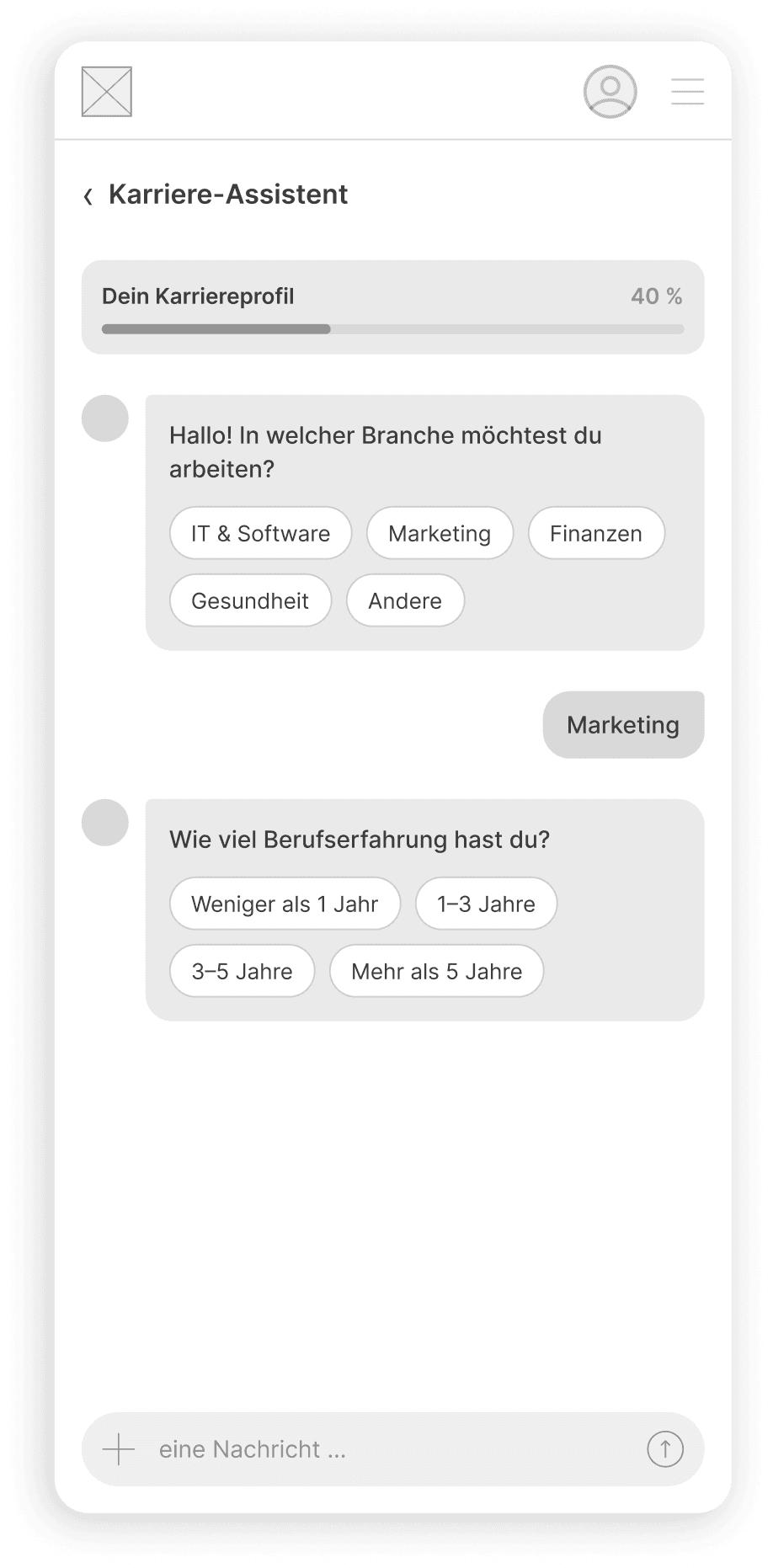




Mobile Version
Desktop Version
Mid-Fidelity Wireframes
The platform enables users to submit their career documents for review with a simple upload. Keeping the entire feedback process in one place makes it faster, easier, and more convenient.

I interviewed 5 potential users with a migration background to understand their professional needs, expectations, and challenges. I explored their coaching experiences, attitudes toward AI support, preferred communication formats, and factors that would encourage regular use of the platform.


Key Outcomes
5/5 Users
said the structured career plan made their goals feel more achievable and motivating
4/5 Users
reported increased confidence when choosing a coach
3/5 Users
would use the CV Check feature to receive feedback from a coach.
User Research
ACCESSIBILITY

AI-assisted research synthesis: summarising interview findings, identifying recurring patterns and supporting affinity mapping.
Design system AI analysis: Connected Claude Code to Figma via MCP and gave it access to my design and design system. I used it to analyse
components, tokens, Auto Layout and accessibility, identifying issues such as text contrast and touch target sizes. I reviewed the findings and
refined my design system accordingly.